

- Inventory-led models destroy capital at scale — YNAP posted a €1.46B loss in the year ended March 2024 (Richemont FY2024) before Richemont transferred it to Mytheresa
- Luxury conglomerates are building their own direct channels — LVMH, Kering, and Richemont all invested in DTC infrastructure; third-party platforms lose priority access to hero products and exclusive drops
- Customer loyalty is to the brand, not the marketplace — the platform provides no protection against disintermediation; switching cost for the luxury shopper is zero
- Post-pandemic reversal happened faster than platforms could adjust — luxury shoppers returned to physical stores in 2022–23, exposing inventory imbalances and cost structures built for a peak that didn't persist
- Online luxury is still expanding — 21% of personal luxury goods are now sold online (Bain/Altagamma 2025); the platform failures are structural, not a signal that the channel is saturated
- Top-customer concentration makes the model viable — Mytheresa's top 3% of customers generate 36% of GMV; high-LTV buyers sustain the economics at sufficient scale
- Resale operates on fundamentally different economics — The RealReal and Vestiaire carry no unsold inventory risk; supply grows with the secondary market without capital commitment
- Consolidation creates minimum viable scale — LuxExperience (Mytheresa + Net-a-Porter + YOOX + Mr Porter) targets €4B in net sales, the level at which platform unit economics become sustainable
The luxury multi-brand online platform category emerged in the 2000s and scaled aggressively through the pandemic. By 2023, overcapitalisation, inventory imbalances, and the return of in-store shopping triggered a wave of collapses. What remains is a more consolidated, more cautious market — split between inventory-led curators, asset-light marketplaces, and a fast-growing resale segment.
| Platform | Founded | HQ | Business Model | Key 2024–25 Metric | Status |
|---|---|---|---|---|---|
| Mytheresa / LuxExperience NYSE: LUXE |
2006 | Munich, Germany | Inventory-led, curated edit — buys and holds stock. Up to 250 brands. | €988.5M GMV (FY25 Mytheresa segment). Net sales +8.9% full-year, +11.5% Q4. | Active / Profitable |
| Farfetch Under Coupang since Jan 2024 |
2007 | London (now Seoul) | Asset-light marketplace connecting 1,500+ luxury boutiques and brands. No owned inventory at core. | $1.7B revenue (2024). GMV not published post-acquisition. Losses narrowed to $34M; profitable in Q4 2024. | Restructured |
| Net-a-Porter / Mr Porter Part of LuxExperience |
2000 | London / Milan | Inventory-led luxury e-tailer. Net-a-Porter = full-price women's; Mr Porter = menswear. | Part of LuxExperience group from April 2025. YNAP posted €1.46B loss in the year ended March 2024 (Richemont FY2024). | Acquired — now LuxExperience |
| Cettire ASX: CTT |
2017 | Melbourne, Australia | Dropship — zero inventory. Orders placed, sourced from brand boutiques, shipped direct. 1,300+ brands. | AU$742.1M revenue (FY2025). US = 50% of total. Net loss AU$2.65M. | Active / ASX-listed |
| LuisaViaRoma | 1930 | Florence, Italy | Inventory-led, concept store heritage. 600+ brands. Physical flagship + global e-commerce. | Revenue not publicly disclosed. Company is private; third-party estimates ~€200M. | Active / Private |
| Moda Operandi | 2010 | New York, USA | Trunk-show pre-order model — customers order from the runway, delivered 3–5 months later. Also in-season inventory. 1,000+ brands. | Revenue not publicly disclosed. $481M total funding raised. $10M round August 2024. | Active / Private |
| The RealReal Nasdaq: REAL |
2011 | San Francisco, USA | Consignment resale. Sellers send items; authenticated by in-house experts; sold on commission. 38M+ members. | $1.83B GMV / $600M revenue (2024). First-ever positive full-year EBITDA. | Active / Profitable EBITDA |
| Vestiaire Collective | 2009 | Paris, France | Peer-to-peer luxury resale marketplace. Sellers list; Vestiaire authenticates before delivery. 23M+ members, 70+ countries. | €824M GMV (2023/24 estimate, per crowdfunding investor materials). Revenue private. | Active / Kering-backed |
| 1stDibs Nasdaq: DIBS |
2000 | New York, USA | Marketplace for vintage/antique/contemporary luxury — furniture, home décor, art, jewellery, fashion. Commission-based. | $362M GMV / $88.3M revenue (2024). Cash position $103.9M. | Active / Nasdaq-listed |


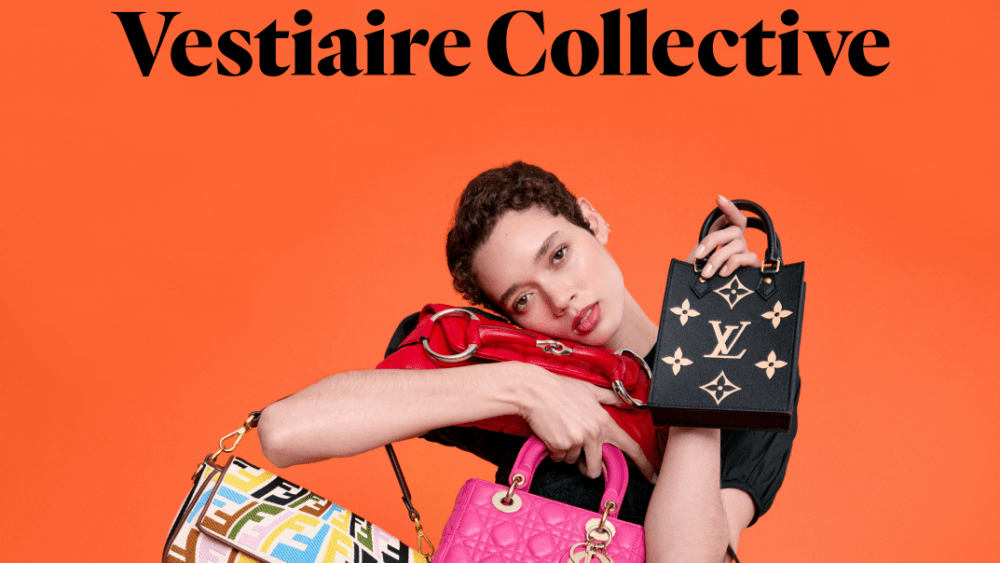
Images: Unsplash (luxury editorial) · WWD (Net-a-Porter, Vestiaire Collective)

Between December 2023 and February 2026, the luxury e-commerce platform sector experienced its deepest consolidation since the category was created. The common causes: debt accumulated during the pandemic-era growth surge, a rapid post-pandemic correction in online luxury spending, the return of in-store shopping, and — for US-exposed platforms — the elimination of the US de minimis import exemption which had allowed goods under $800 to enter duty-free.
While full-price luxury platforms faced existential pressure, the luxury resale segment continued growing. Two platforms dominate: The RealReal in North America, and Vestiaire Collective in Europe. Both grew through the same period that collapsed Farfetch and MatchesFashion — and The RealReal reached its first-ever positive EBITDA in 2024.
2024 results: $1.83B GMV (up 6% YoY) · $600M revenue (up 9%) · First-ever positive full-year Adjusted EBITDA of $9 million · Free cash flow positive $1 million (first time ever) · 38M+ members · 972,000 active buyers (up 5% YoY) · Average order value $545 (up 4%).
Model: sellers consign items to The RealReal, which authenticates, photographs, lists, and sells. Seller receives a commission. The RealReal takes the balance plus a buyer's premium on some categories. Authentication is in-house by trained experts — a key brand differentiator.
Scale: €824M GMV (est., per Feb 2024 crowdfunding materials) · 23M+ members · 70+ countries · 30,000+ new items listed weekly · 15 rounds of funding.
Model: peer-to-peer — sellers list items directly; Vestiaire authenticates before delivery to buyer. Commission taken from seller and buyer. Different from consignment: seller retains ownership until sold. Kering took a strategic 5% stake in 2021 as part of a $216M round backed by Kering and Tiger Global Management — the only major luxury conglomerate to hold equity in a resale platform.
2024 results: $362M GMV (flat vs 2023, recovering from prior-year decline) · $88.3M revenue (up 4% YoY) · Net loss $18.6M (improved from $22.7M) · Cash $103.9M · ~64,000 active buyers (up 6% YoY).
Model: marketplace for vetted dealers in vintage, antique, and contemporary luxury — primarily furniture, home décor, art, and jewellery. Fashion is a secondary category. Commission-based; 1stDibs does not hold inventory.

Images: The RealReal (YouTube thumbnail) · WWD (Vestiaire Collective)
The single largest structural event in luxury e-commerce in 2025 was Mytheresa's acquisition of YOOX NET-A-PORTER from Richemont. The deal closed April 23, 2025 and created a combined group — renamed LuxExperience B.V., listed as LUXE on NYSE from May 1, 2025 — that brings together five platforms under one ownership structure: Mytheresa, Net-a-Porter, Mr Porter, YOOX, and The Outnet.
NYSE: LUXE · Target: €4B combined GMV
YNAP had posted a €1.46 billion loss in 2023 and was declining 14% annually under Richemont ownership. The Mytheresa acquisition was not straightforward — Richemont had also held talks with Farfetch before Farfetch's collapse. For Mytheresa, the deal creates immediate scale in the full-price and off-price segments, and gives the combined group the customer data, brand relationships, and logistics infrastructure to compete at a tier that neither could achieve alone.
The three major luxury conglomerates each took a different approach to multi-brand online platforms — and the collapses of 2023–2026 have reinforced their divergent strategies.